
PARIS — French Army Chief of Staff Gen. Pierre Schill, in the job since July 2021, has led the country’s land forces in a push toward higher readiness and preparation for high-intensity warfare, incorporating lessons from Ukraine while preparing for networked and drone-enabled conflict.
In an interview ahead of the Eurosatory defense show here, which runs June 15-19, the general discussed how the Army is embedding innovation and adapting to a rapidly evolving battlefield.
This interview has been edited for length and clarity.
We’re in a period of accelerating innovation, but armies in peacetime often struggle to move beyond experimentation. How do you ensure adoption at unit level, and where does it still fail?
We are indeed experiencing a tremendous phase of technological acceleration, probably comparable in scale to major historic disruptions such as the Industrial Revolution or the mechanization of warfare in the twentieth century. This transformation is not over; it has probably only just begun.
In this environment, innovation cannot be considered as a final state. There is no such thing as an ‘innovated army.’ Innovation has become a permanent adaptation process. Operational superiority now depends as much on the ability to learn and evolve quickly as on the equipment itself.
To accelerate the transition from innovation to experimentation and then to operational implementation, the French Army relies on two complementary dynamics.
The first is ‘bottom-up’ innovation, based on pioneering spirit, initiative and the ability of units to adapt their practices and equipment in response to operational realities. Recent conflicts show that this tactical agility has become decisive.
The second is ‘top-down’ innovation, structured around the Future Combat Command, operational feedback and overall capability coherence. It allows us to direct efforts, establish priorities and integrate useful developments into a broader vision of future warfare.
The brigade exploratory hubs ensure the connection between these two dynamics. They enable rapid transformation of experimentation into concrete operational capabilities. The ‘subsidiarity funding mechanisms’ now allocated to them are proving to be a highly effective tool for accelerating acquisition and battlefield adaptation. We probably need more agile and reactive acquisition models to maintain operational advantage.
Armies often prepare for the last war. What is the French Army most at risk of over-learning from Ukraine, and how are you avoiding that?
The war in Ukraine is a tremendous source of lessons, but the first risk would be to turn it into the single model for future warfare.
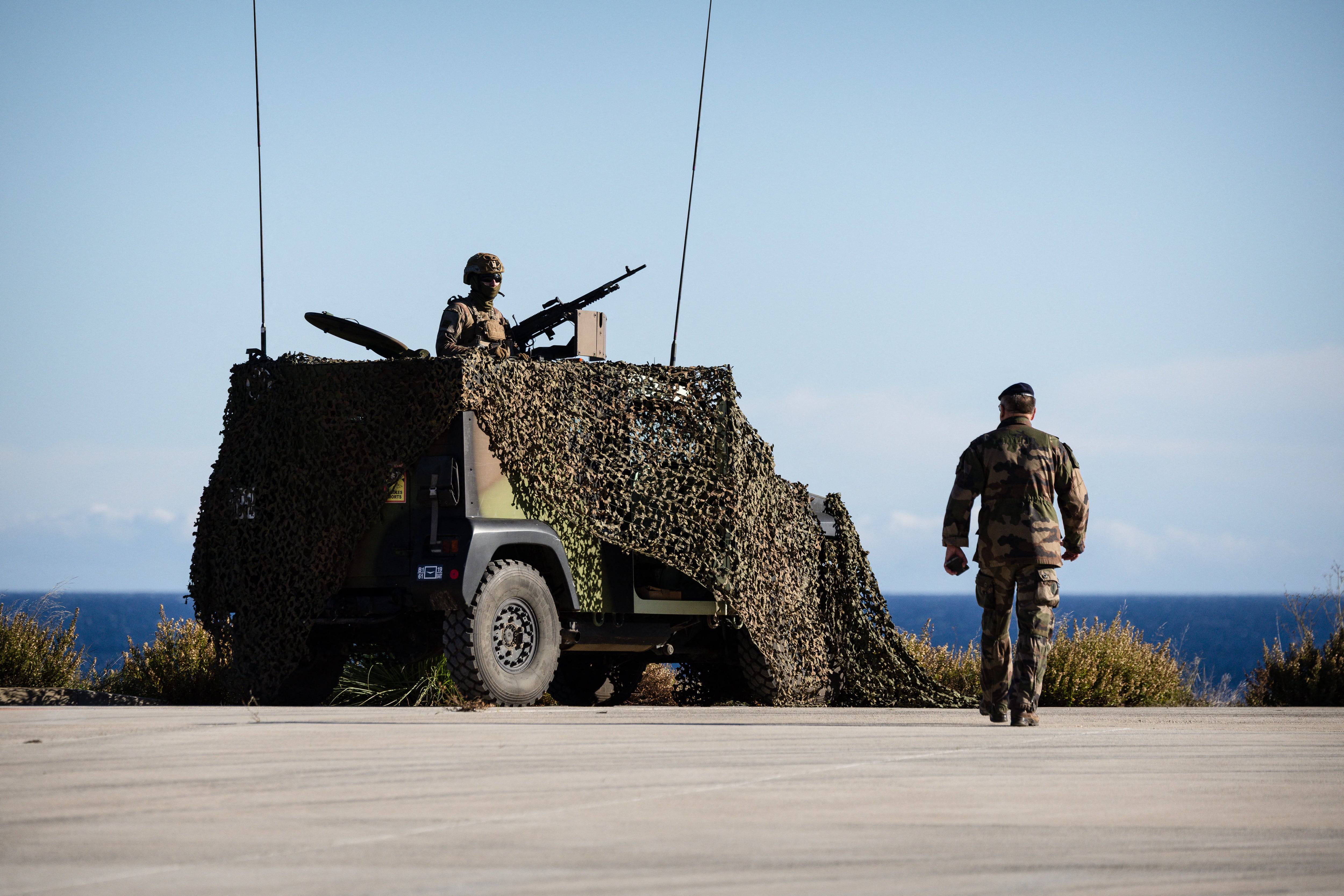
What Ukraine demonstrates first is the spectacular acceleration of certain forms of warfare: drones, electronic warfare, battlefield transparency, data exploitation, artificial intelligence and the partial automation of tactical functions. However, at the same time, this war also shows that older, even archaic, forms of combat have not disappeared. Trenches, door-to-door urban fighting, attrition and close combat remain very concrete realities. The lesson is the superposition of forms of warfare rather than the replacement of old forms by new ones. Technology changes the methods of combat, but it does not replace maneuver, command, morale or the ability to endure over time.
We should avoid excessive analogies. France is not Ukraine. France is a nuclear power, a member of NATO, and relying on a full-spectrum military model. We are not facing the prospect of a massive enemy land invasion on our territory under the same strategic conditions as Ukraine. The French model must preserve its own coherence which means that the French Army remains able to operate across the three strategic spaces that now structure our commitments: homeland protection, operations in overseas territories and crisis zones, and high-intensity coalition warfare, for instance in Europe. This requires maintaining a versatile, adaptable and balanced force rather than one specialized in a single form of conflict.
You’ve set a goal for an “armée de combat,” or warfighting-ready army. What training has changed because of Ukraine, what did the Orion 26 exercise confirm or challenge, and what have you deliberately avoided changing?
Training has evolved toward greater realism, dispersion and friction. Units now train in disputed environments under the constant threat of drones, electronic jamming, deep strikes and information saturation.
We have also reinforced command training in degraded environments, headquarter protection, mobility, logistic survivability and combined-arms coordination.
Orion 26 confirmed the relevance of the French Army’s transformation plan. The plan that had been established was the right one. The exercise validates the need for coherent large formations capable of sustaining command over time, operating in coalition and maintaining very high operational tempos. It also confirms that the effort must focus first on differentiating capabilities, those that provide operational superiority: lethality, battlefield transparency, command and control, and sustainment. The priority is lethality, particularly deep fires.
If the French Army’s planned war-ready division in 2027 were assessed today, what capabilities would still be missing, and which would be hardest to generate in a crisis?
The coherence of a modern division does not rely solely on maneuver brigades. The most critical capabilities are often those that enable maneuver itself: deep fires, air defense, electronic warfare, command systems, logistics, bridging, mobility, maintenance and counter-drone warfare.
These are precisely the areas in which the French Army is now accelerating its effort. The updated Military Programming Law focuses on strengthening these differentiating capabilities for the divisions and the army corps.
The hardest capabilities to generate rapidly in a crisis are those requiring long-term preparation: heavy logistics, experienced command chains, stockpiles, specialized technical expertise. An army cannot be improvised when the shock comes.
Drones and intelligence, surveillance and reconnaissance have made the battlefield far more transparent and have constrained movement in Ukraine. How do you still achieve surprise, and what changes are needed to restore operational maneuver?
Surprise is not disappearing; it is changing in nature. On a more transparent battlefield, it relies less on total invisibility and more on speed, deception, dispersion, saturation and the ability to disrupt the enemy faster than he can adapt.
This requires several evolutions: stronger electronic warfare capabilities, signature reduction, hybridized networks, dispersed headquarters, faster decision loops and autonomous systems capable of operating in highly contested environments. We should also restore operational depth in maneuver. The combination of drones, robotics, long-range fires, electronic warfare and mobility should precisely recreate opportunities for breakthrough and movement. This will be one of the key challenges of land warfare in the coming decade, and a central topic at Eurosatory.
Scorpion (the French Army’s vehicle modernization program) increases connectivity but also creates complexity and risk of overload. In a degraded environment, what fails first, systems or humans, and how should the Army adapt decision-making and automation?
The risk exists in both domains. Systems can be jammed, degraded or saturated. The accumulation of information and the tempo of modern combat can also overwhelm soldiers. The answer is to use technology to simplify decision-making rather than complicate it. Artificial intelligence should help prioritize information, accelerate some tasks and reduce the cognitive load, preserving the commander’s ability to decide.
Technology enhances combat power; it must not create absolute dependency. This is precisely why ‘commanding by intent’ remains at the core of our model. The commander sets the objective, gives meaning and defines the global framework of the action, but initiative belongs to the subordinates. In a degraded, dispersed and saturated environment, this operational subsidiarity becomes a condition for effectiveness.
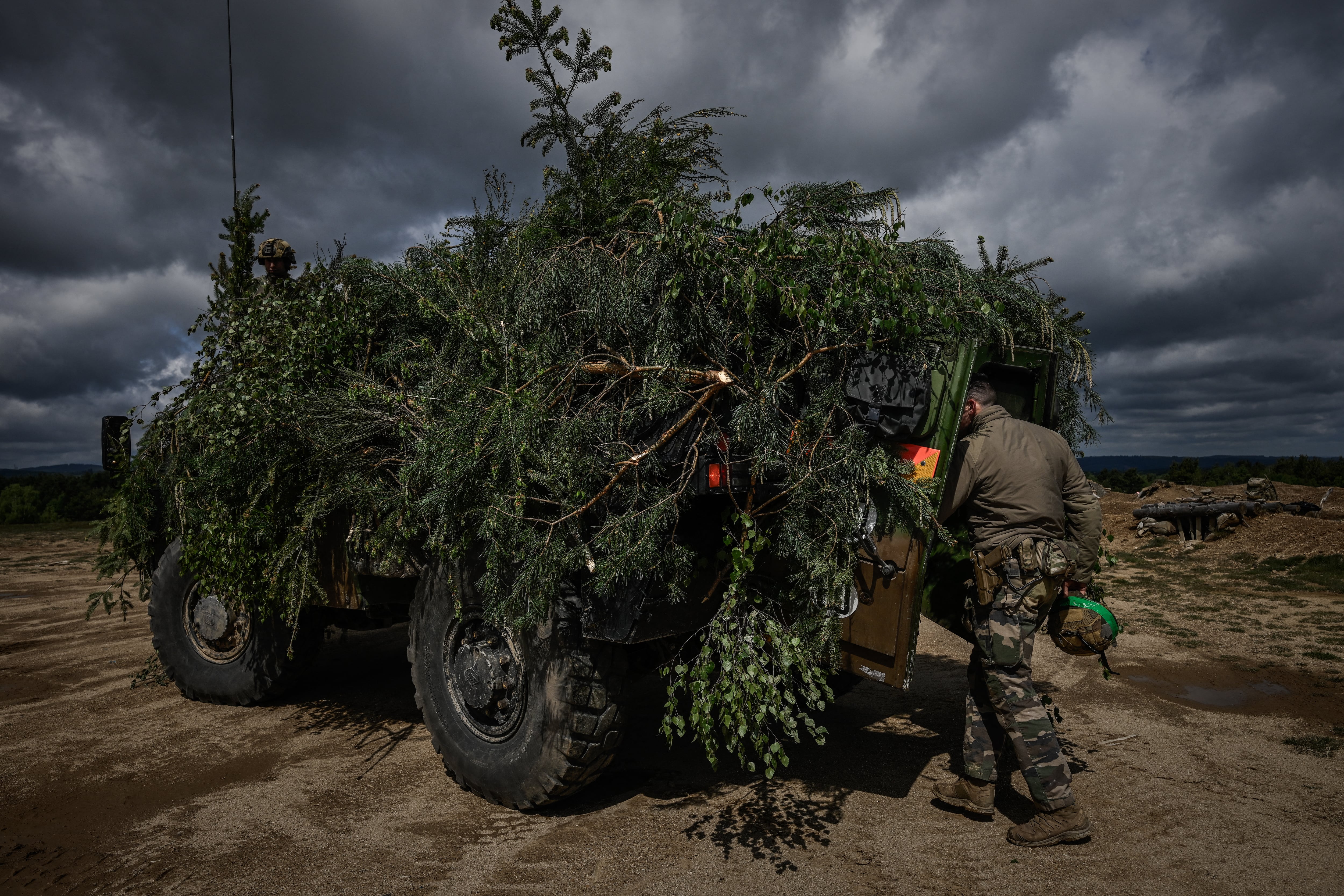
In war, the objective comes first: What matters is mission success. Technical systems may support decision-making, but they will never replace the commander’s responsibility, moral strength or the culture of results that remains at the foundation of military command.
France aims to act as a framework nation capable of commanding major European land operations. Without U.S. enablers or command structures, what are the main gaps Europe still needs to close?
The message now addressed by the U.S. to Europeans is clear: Europe must take greater responsibility for its own defense. This does not call NATO into question. NATO remains the framework for collective defense on the continent, but it does require strengthening Europe’s ability to act more independently whenever circumstances demand it.
Europe possesses high-quality armed forces, real operational experience and a strong defense industrial and technological base. The challenge now is one of coherence, responsiveness and mass.
Contemporary conflicts remind us that the ability to sustain command over time, produce rapidly, support major military efforts and operate effectively in coalition has once again become essential. The issue is therefore at the same time operational, industrial and cultural. Europeans must rebuild production capacity, stockpiles and endurance compatible with today’s strategic realities.
They must also develop stronger shared habits of training. In this regard, France assumes a specific responsibility as a credible framework nation capable of commanding a land coalition. Our ambition is not to replace our allies, but to contribute to a stronger Europe, more capable of shaping its own strategic destiny.
How does Pendragon (the French project developing robotized ground combat) shape your expectations for the Main Ground Combat System? Where will future firepower sit, on crewed platforms or the unmanned systems that support them?
Recent conflicts have shown that the tank remains indispensable, but it can no longer be an isolated platform. What a single tank achieves today will tomorrow be generated by an interconnected combination of manned and unmanned systems.
This is precisely what Pendragon reveals: robotics is not an additional capability, it changes the way warfare itself is conducted. The central issue becomes the combat cloud, connectivity and cooperation between systems rather than a single platform. The new armored combat system remains relevant if it is conceived as a system of systems integrated into the TITAN environment of the 2030–2040 decade. Future firepower will rely on a combination of highly protected manned platforms able to decide and breakthrough, paired with swarms of autonomous systems providing mass, sensors, saturation and attrition.
Rudy Ruitenberg is a Europe correspondent for Defense News. He started his career at Bloomberg News and has experience reporting on technology, commodity markets and politics.


