54 minutes ago
Wycliffe Muiaand
Alfred Lasteck

 EPA-EFE
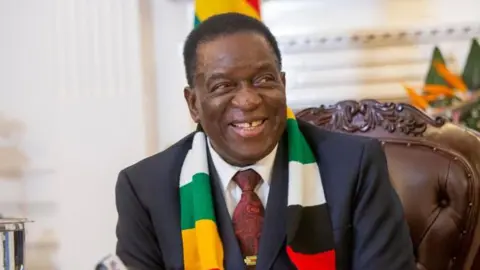
The proposal would extend Emmerson Mnangagwa's term by two years and scrap direct presidential elections.

54 minutes ago
Wycliffe Muiaand
Alfred Lasteck
EPA-EFE
Zimbabwe's lower house of parliament has passed a bill to extend presidential terms from five to seven years, which would allow President Emmerson Mnangagwa to remain in power until 2030.
More than 200 lawmakers voted in favour of the draft legislation on Thursday, surpassing the vote threshold required for a two-thirds majority to amend the constitution.
The bill also scraps direct presidential elections, with future presidents chosen by parliament.
Mnangagwa, 83, took power in 2017 after ousting long-time ruler Robert Mugabe with the backing of the military - and went on to win disputed elections in 2018 and 2023.
The bill now heads to the senate, where it is also expected to secure approval, before being enacted by the president.
This is the culmination of a campaign by the ruling Zanu-PF party - in power since independence in 1980 - to amend the constitution and extend presidential terms, a plan that received cabinet backing in February.
The president had previously described himself as a constitutionalist and pledged to respect term limits.
During Thursday's vote, Speaker of Parliament Jacob Mudenda announced that 216 lawmakers had backed the legislation, surpassing the 187 votes required to amend the constitution. Forty-two lawmakers voted against it.
The amendment contains several provisions:
Opposition parties, civil society groups and constitutional lawyers have argued that such fundamental changes should be put to a national referendum rather than being approved solely through parliament.
Initially hailed by supporters as a reformer who would restore economic growth and democratic governance, Mnangagwa's presidency has instead been marked by economic challenges, disputed elections and growing concerns over democratic backsliding.
The latest constitutional changes have intensified debate over Zimbabwe's political future, with opponents warning that the amendments could weaken democratic accountability, while supporters maintain they are necessary to ensure continuity and stability.
A new constitution adopted in 2013 restricted a president to serving a maximum of two terms, adding that any move to extend term limits would need to be endorsed by voters in a referendum and that a sitting president cannot benefit from any extension unless voters give their approval in a second referendum.
However, on Wednesday, the country's Constitutional Court dismissed a legal challenge seeking to block the bill.
 Getty Images/BBC
BBC Africa podcasts

The Ivory Coast football federation have announced their forward Elye Wahi will be allowed into Canada for their next World Cup game after earlier being denied entry.

Ana Candia Evora, the mother of Cape Verde's goalkeeper Vozinha, is finally heading to the US to see her son play.
Modern operations involve more sensors, more platforms, and more information than ever before. The challenge is no longer collecting information; it is bringing different pieces together and turning them into […]
Nigeria and the Hashemite Kingdom of Jordan have formalized their defence collaboration through signing a Memorandum of Understanding (MoU) on 10th May 2026, in Amman, Jordan. The agreement was officially signed […]