Putin’s $2.5 trillion gambit
As Russia’s war in Ukraine enters its fifth year, debates increasingly hinge on a central question: How costly has the war been for Russia itself?
Defense News
75
5 min read
0 views

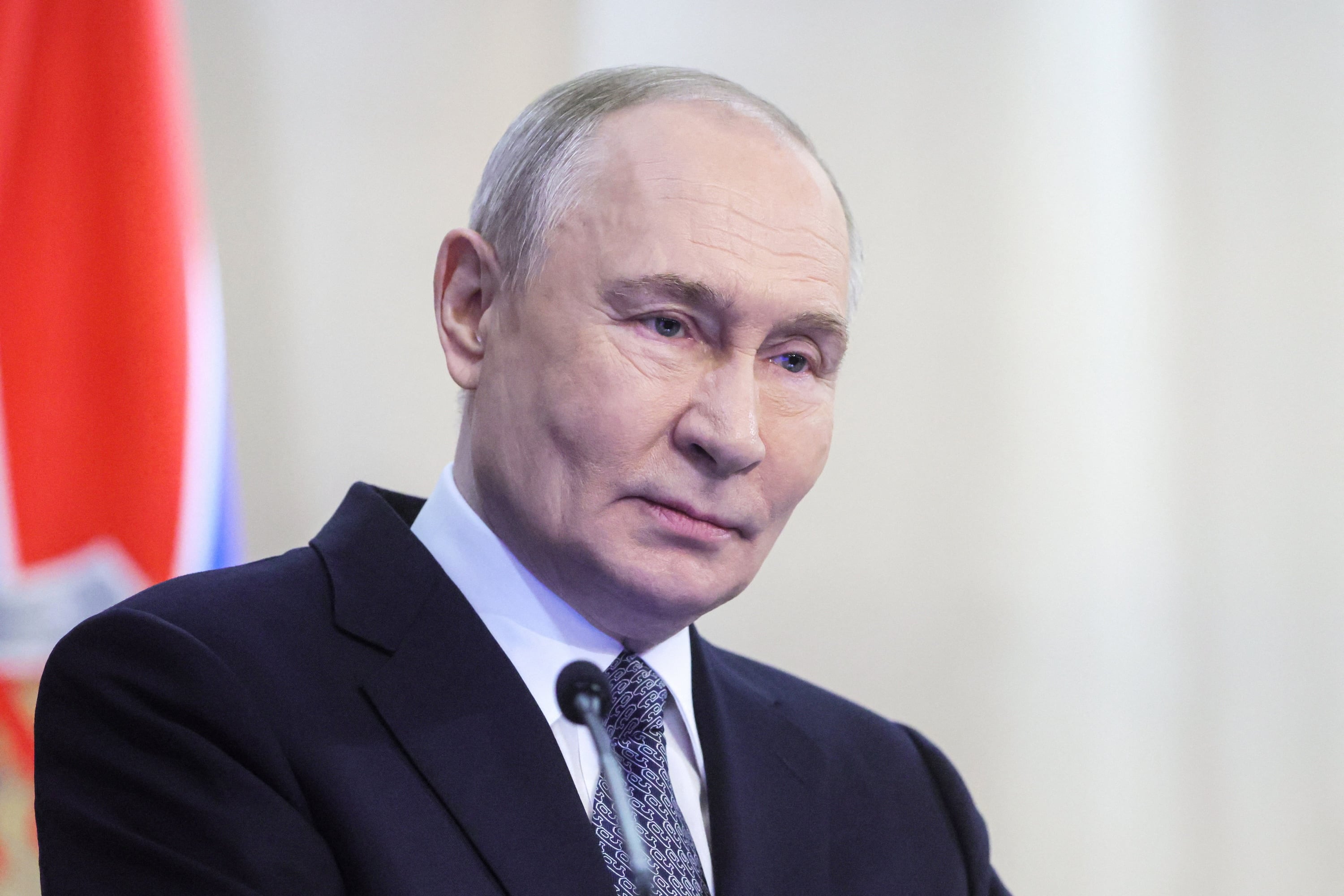
As Russia’s war in Ukraine enters its fifth year, debates increasingly hinge on a central question: How costly has the war been for Russia itself?
As Russia’s war in Ukraine enters its fifth year, debates over sanctions, negotiations and military aid increasingly hinge on a central question: How costly has the war been for Russia itself? Our analysis, using standard economic tools, finds the cost so far to be about $2.5 trillion. That doesn’t mean, of course, that Putin has borne much of that cost.
A January 2026 report by researchers from the Center for Strategic and International Studies indicates that this war has now claimed 325,000 Russian lives and 875,000 wounded (or missing). For context, roughly 15,000 Soviet military personnel were killed in the ten-year Afghan war.
How do economists place a value on fatalities and wounded people? We typically do so by using the value of a statistical life (VSL). Economists derive VSL estimates by analyzing everyday tradeoffs people make between income and small changes in their probability of death. For example, numerous studies have analyzed how much people are willing to pay in the product safety market (air bags and seat belts) for reductions in fatality risk. In other studies, researchers have analyzed the connection between labor market fatality rates and wages.
Decades of research by economists have found that Americans, on average, are willing to pay about $140 for every one per 100,000 reduction in fatality risk. This equates to a $14 million (in 2026 dollars) VSL. But that’s for Americans. What are the values for Russians?
VSL estimates across countries track directly with per capita income. For example, a 10% rise in income adjusts the VSL upward by 10%, with the opposite being the case for decreases. Russia’s per capita income is 18.3% that of the United States. This suggests that Russian lives should be valued at approximately $2.6 million. Therefore, the total loss from Russian military fatalities is: 325,000 x $2.6 million = $845 billion.
As for valuing the losses to 875,000 wounded Russians, economists apply similar methods to estimate injury valuations. The Department of Transportation recommends using a value of 10.5% of the VSL for “serious” injuries. That would translate to about $270,000 per wounded Russian. Therefore, the total loss from Russian wounded soldiers is: 875,000 x $270,000 = $236 billion.
Besides casualties, other direct Russian military costs include equipment losses and funding for military operations (such as fuel and munitions). MinFin, which reports official government statistics, documents the following Russian losses: 12,000 tanks, 24,000 armored fighting vehicles and 400 planes, among others. Total Russian equipment losses are estimated to be $125 billion.
In a December 2023 RAND report, researchers estimated Russian operational costs in Ukraine at $3.1 billion per month. Extrapolating this value over four years of war yields an estimate of $149 billion for Russian operating costs.
What is the war’s overall impact on Russia’s economy? Since the invasion, many economic headwinds have battered Russia. International sanctions and an exodus of 650,000 Russians moving abroad have exacerbated the economic difficulties. In addition, various international organizations have frozen $340 billion worth of financial assets. Furthermore, an October 2025 report from the World Bank documents serious pressures on the current Russian economy, including year-over-year inflation running at 9.5% and interest rates at 20%.
Given the amount of negative economic information, it is difficult for analysts to obtain a specific value on economic losses. To simplify matters, we focus on a July 2025 study by researchers from the University of California, Berkeley. That study uses pre- and post-invasion professional forecasts for GDP rates in the Russian Federation to approximate the economic impact of the war. Their estimates suggest post-invasion Russian GDP losses of $281 billion per year on average. Using these values yields a cumulative GDP loss of $1.124 trillion since the invasion.
Combining casualty figures, equipment and operational costs, and GDP losses indicates a total cost of approximately $2.5 trillion for the Russian Federation. To put that number in perspective, we note that it exceeds Russia’s $2.2 trillion GDP.
How do these costs compare to the benefits? We measure “benefits” as the land grab by Putin. Estimates based on data from the Institute for the Study of War show that Russia has gained approximately 28,000 square miles since the start of the war — a territory equivalent to about 10% of the size of Texas. Conquering a territory of this size has come at a cost of approximately $90 million per square mile in blood and treasure.
Of course, these costs, while borne by Russian society largely through conscription and lower living standards, are not borne in the same way by Putin himself. Napoleon, the inventor of modern conscription, was once told that a planned operation would cost too many men. He replied, “That is nothing. The women produce more of them than I can use.” Possibly Putin has a similar attitude.
David R. Henderson is a research fellow with Stanford University’s Hoover Institution. Ryan Sullivan is an associate professor of economics at the Naval Postgraduate School.
The views expressed here are those of the authors and do not reflect the official policy or position of the Department of Defense, the U.S. government or any other institution with which the authors are affiliated.
Secretary of War Pete Hegseth said there is no shortage of American will, nor is there a shortage of materiel, when it comes to U.S. kinetic engagement against the Iranian terrorist regime during Operation Epic Fury.

The Air Force's lethality depends on the professionalism of airmen and the capability of their equipment, said Air Force Gen. John D. Lamontagne, Air Force vice chief of staff, who testified at a Senate Armed Services Committee hearing on joint force readiness in Washington.

The vice chiefs of staff for the armed services testified during a Senate Armed Services Committee hearing in Washington on the current readiness of the joint force.
The Navy is participating in exercises and operations worldwide, said Navy Adm. James W. Kilby, vice chief of naval operations, who, along with other service leaders, testified at a Senate Armed Services Committee hearing in Washington on joint force readiness.