
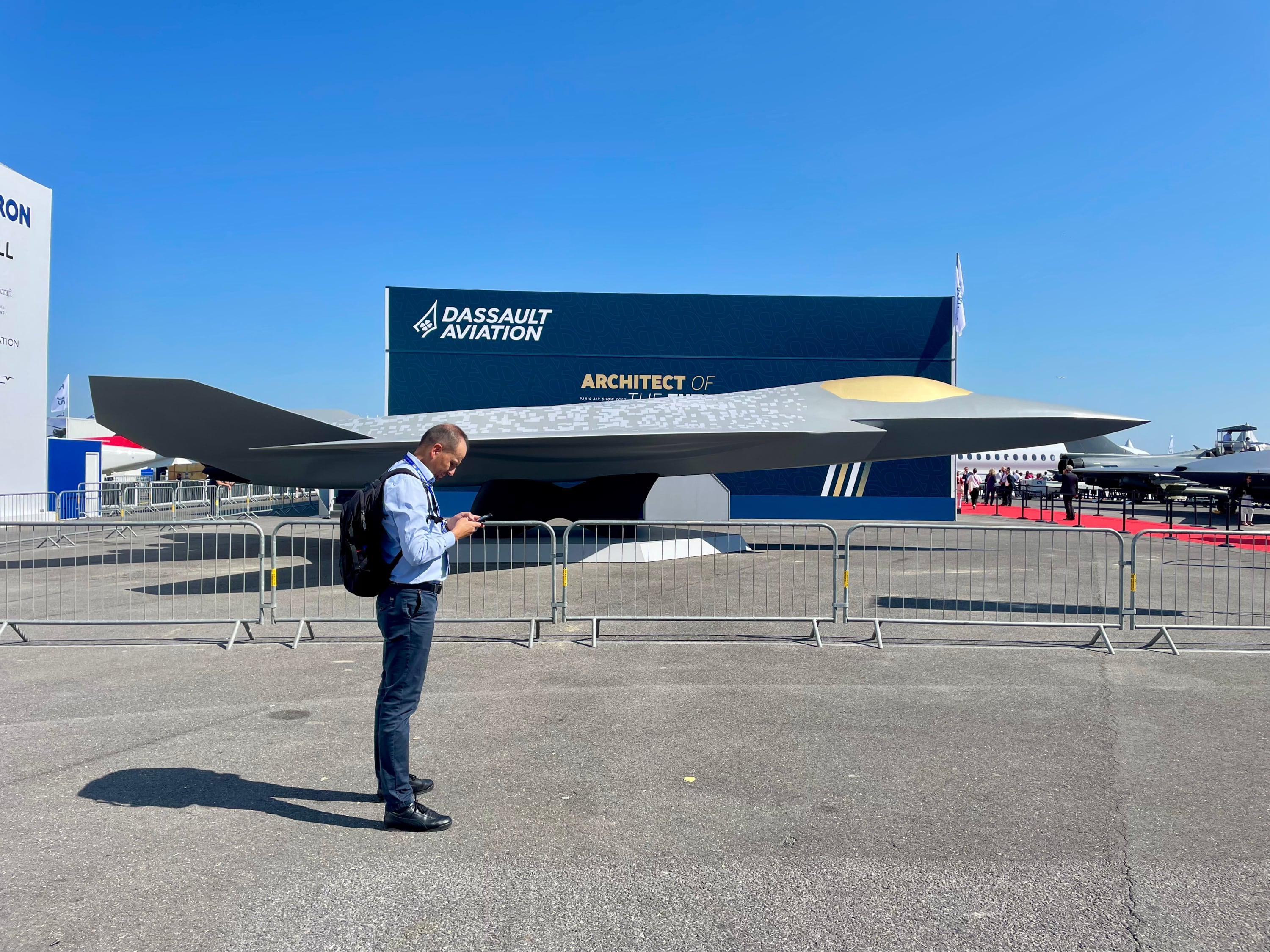
COLOGNE, Germany — German defense leaders will go back to the drawing board in their quest for a next-generation fighter jet following the end of the once-ambitious French-German-Spanish Future Combat Air System.
As the dust was still settling in Berlin from Monday’s bombshell news, Defense Minister Boris Pistorius outlined three options on Tuesday, plus a mysterious fourth path that he alluded to but left unexplained.
One option consists of buying additional stealthy F-35 jets from the United States on top of the 35 already ordered, he said on the sidelines of a meeting with his Czech counterpart, Jaromír Zůna, in Berlin.
German news outlet Der Spiegel reported last October that plans were already in the works to purchase 15 such warplanes from the U.S., to the tune of almost $3 billion.
Pistorius confirmed those plans are now on the table, saying they could be a “bridge” solution “or whatever” on the way to a next-generation weapon for Germany.
The second option entails Berlin getting involved in an existing international fighter program with sixth-generation features, Pistorius said.
Aside from a U.S. push to that end, the most obvious candidate for this path would be a British-Italian-Japanese effort, dubbed Global Combat Air Programme.
Finally, Germany could start its own program, Pistorius said, “under German leadership with Airbus and other partners.”
He said German defense leaders had been talking with Airbus about feasible options “for months,” because the end of the FCAS program had been expected.
Pistorius largely blamed unresolvable differences with French industry champion Dassault over intellectual property as well as diverging military requirements for the program’s demise.
In the end, government leaders from France and Germany were unable to compel the companies involved to cooperate, he said, as much as Paris and Berlin had wanted to.
“Knowing what we know today, we wouldn’t set up a program in this way again,” Pistorius said.
Sebastian Sprenger is associate editor for Europe at Defense News, reporting on the state of the defense market in the region, and on U.S.-Europe cooperation and multi-national investments in defense and global security. Previously he served as managing editor for Defense News. He is based in Cologne, Germany.


