
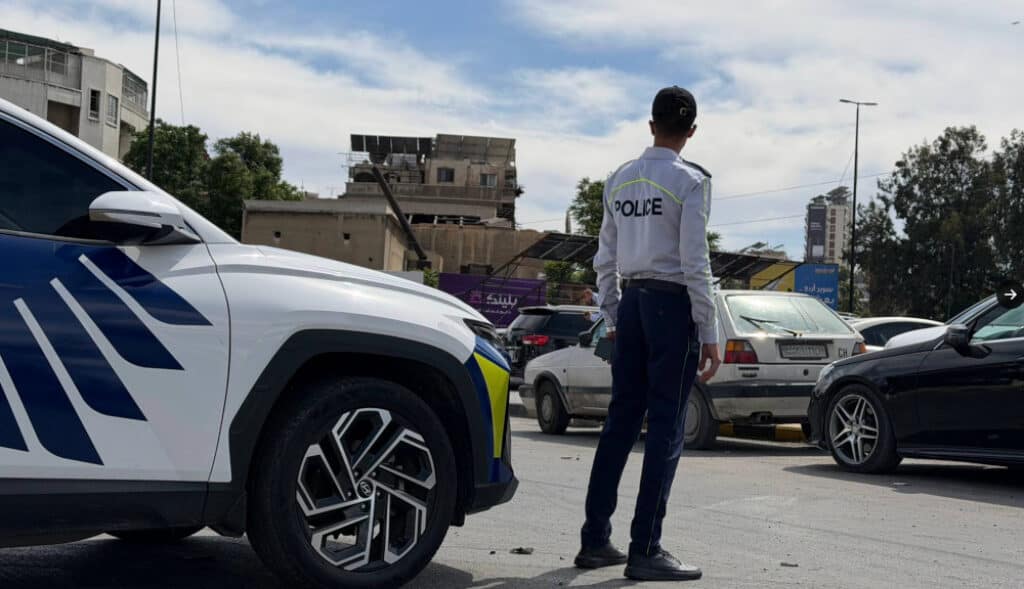
On May 19, a car bomb exploded near a Ministry of Defense building in central Damascus’s Bab Sharqi area. One Syrian soldier was killed, and 23 civilians were wounded, the official Syrian Arab News Agency (SANA) reported. On the same day, Syrian security forces detained several people in a rural part of Deir Ez Zor Governorate. The incidents came as the Syrian government continued attempts to integrate Kurdish groups, is gearing up to take part in a military exercise in Turkey, and was invited to take part in a G7 summit in Paris in mid-June.
Syria continues to struggle with internal security as it seeks to rebuild international relationships and increase its defense and economic ties. On the security front, the bombing in Bab Sharqi appeared to be a coordinated attack, as it involved a car bomb and at least one other improvised explosive device (IED). Security forces were in the process of dismantling the IED when the car bomb detonated. Bab Sharqi is also known as an area where Syria’s Christian minority lives in Damascus.
Syrian authorities have not released any new information about the bombing since May 19. Meanwhile, in Deir Ez Zor, a raid by security forces detained two people wanted for unspecified attacks in the region, Syria’s North Press Agency reported.
As Syria continues to struggle with security threats, there are positive signs in other sectors. Kurdish families who had fled the northwest region of Afrin in 2018 after a Turkish invasion have been returning home to the historically Kurdish area. “A convoy carrying 623 displaced families returned from the Kurdish town of Kobane in northern Syria to Afrin,” the Rudaw Media Network reported on May 19. “Rudaw understands that five previous convoys carrying more than 2,400 families had already returned to Afrin from the cities of Hasaka and Qamishli,” the report noted. Ilham Ahmad, a Kurdish official who was involved with the Democratic Autonomous Administration of North and East Syria over the last decade, was present as the families returned to Afrin.
The Kurdish return to Afrin appears to be part of the larger reconciliation taking place between Damascus and the Syrian Democratic Forces (SDF), which had controlled eastern Syria for a decade with US backing. The SDF’s integration into the government security forces has continued. For instance, Syria’s Interior Minister Anas Khattab hosted Kurdish members of women’s SDF units on May 21.
“The meeting took place as part of discussions on the security situation and strengthening coordination between the relevant parties in accordance with the January 29 agreement between Syrian Democratic Forces and the interim government in Syria, according to media outlets affiliated with the interim government,” the Kurdish Hawar News Agency noted. Damascus is also moving to appoint representatives from eastern Syria to the country’s electoral college.
Syrian media also reported continued Israeli incursions into areas near Quneitra and the 1974 ceasefire line that forms the border between the countries. Israeli forces moved into a buffer zone along the ceasefire line in December 2024 when Syria’s former Bashar al Assad regime fell. Since then, Syrian media outlets have reported on frequent Israel Defense Forces (IDF) operations in Syria near the border.
For instance, SANA said that there was an incursion on May 21 near the villages of Al Bassali and Um al Lawqas in southern Quneitra countryside. North Press Agency reported on an Israeli operation in the village of Jamla on May 21. Syria’s government has generally downplayed these incidents, preferring an accommodation with Israel. The IDF does not usually put out statements about these limited operations.
On the international level, Syria has continued to seek out partnerships in Europe and Turkey. Syria sent a delegation from the Ministry of Defense to attend the EFES 2026 military exercises in Turkey on May 21. In addition, “Syria will attend the G7 summit in France next month as a guest nation and be represented by President Ahmed al-Sharaa, three sources familiar with the matter said, marking Syria’s first participation in a summit of the group since the forum was founded in 1975,” Reuters reported.
Syria has also partnered with the International Committee of the Red Cross (ICRC) on “the Global Initiative to Galvanize Political Commitment to International Humanitarian Law.” The ICRC says the “initiative seeks to develop a set of concrete and actionable recommendations to ensure that IHL is not only better respected but adapted for the future.”
Reporting from Israel, Seth J. Frantzman is an adjunct fellow at FDD and a contributor to FDD’s Long War Journal. He is the senior Middle East correspondent and analyst at The Jerusalem Post, and author of The October 7 War: Israel's Battle for Security in Gaza (2024).


