
Over the past week, US and Israeli operations across Iran have intensified while negotiations remain unresolved. A US F-15E was shot down on April 4, triggering a roughly 36-hour rescue mission that recovered both crew members through a large-scale operation involving more than 150 aircraft and reported CIA deception measures.
In parallel, the US and Israel conducted strikes targeting Islamic Revolutionary Guard Corps (IRGC) sites storing ballistic missile launchers, facilities tied to missile production and air defense systems, and senior military and intelligence officials in Tehran and beyond, resulting in numerous eliminations.
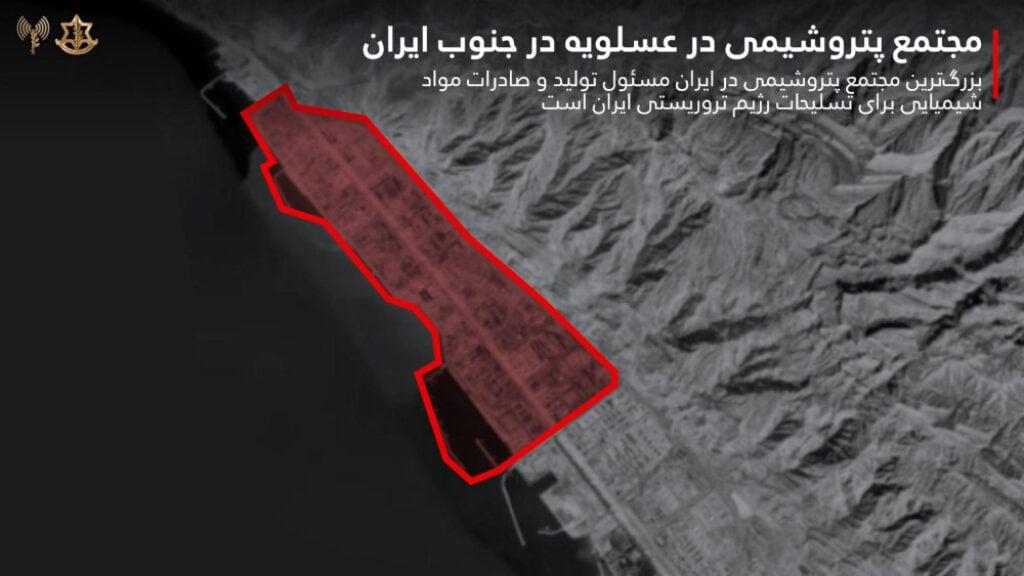
The US and Israeli campaign has also expanded to industrial and economic targets, including petrochemical complexes in Asaluyeh, major steel plants in Ahvaz and Mobarakeh, and other key infrastructure.
Meanwhile, Tehran rejected a US-backed 45-day ceasefire proposal tied to reopening the Strait of Hormuz, instead pushing for broader maximalist terms as both sides weigh the next steps.
The latest military developments
A U.S. F-15E was shot down over Iran on April 4. One crew member was recovered within hours, while the second was rescued on April 5 after evading capture for nearly two days. During the White House briefing on April 6, President Donald Trump called it “one of the most complex search-and-rescue missions ever” and said the operation used “subterfuge” and more than 150 aircraft to get them home. CIA Director John Ratcliffe added that the agency helped deceive Iranian forces during the rescue.
Israel’s Channel 12 claimed that US airstrikes hit Kohgiluyeh and Boyer-Ahmad province near the suspected location of the downed pilot, with some accounts indicating that Iranian search units were hit during the operation. Iranian media claimed there was no direct ground engagement, while a provincial official reported that strikes on “Kuh Siah” killed four individuals and wounded six.
An Israeli source cited by the London-based Iran International said that elite Israeli Shaldag and Sayeret Matkal units assisted US specials operations forces and air assets in the roughly 36-hour mission, during which a US helicopter took fire but returned safely, and a US A-10 Warthog ground-attack jet took fire and eventually crashed after the pilot “determined the aircraft was not in landable condition” and safely ejected over Kuwaiti airspace.
Meanwhile, the IDF Farsi account said that the Israeli military struck a central IRGC site storing multiple weapons, including ballistic missile launchers, along with facilities tied to the production, storage, and development of missiles designed to target aircraft and additional Iranian air defense systems.
The latest on negotiations and the Strait of Hormuz
Trump said on April 6 that the US could escalate to targeting Iran’s broader infrastructure, warning that “the entire country can be taken out in one night” as a deadline he issued for a deal approached. US officials told The Wall Street Journal that Tehran rejected a US-backed 45-day ceasefire proposal tied to reopening the Strait of Hormuz, instead demanding a permanent end to the war, sanctions relief, compensation, and a new framework governing the waterway.
Iranian commentary reflects a view that the strait remains its strongest pressure point. Majid Shakeri, a former adviser to Iranian Parliament Speaker Mohammad Bagher Ghalibaf, who is leading talks with Washington, wrote that a temporary ceasefire “benefits Pakistan, Turkey, Egypt, and the United States, and harms Iran,” questioning why such proposals would even be considered. Separately, an Iranian state media analyst warned that halting the war could leave Iran with a “Gaza-like fate,” stressing that maintaining strategic positioning, especially in the Strait of Hormuz, is essential and that retreat would carry serious security and economic consequences for the Islamic Republic.
The latest assassinations and regime casualties
Trump posted footage of a major strike on Tehran on April 4, saying that “many of Iran’s military leaders” had been “terminated.” The same night, residents across Tehran and nearby Karaj reported “severe explosions,” with some saying their homes “shook” as blasts were heard across multiple neighborhoods.
Israel said it has eliminated several senior Iranian military and intelligence figures in recent strikes in Tehran and beyond. It also indicated that additional unnamed battalion-level missile commanders were killed alongside senior leaders.
Israel also attempted to target Kamal Kharazi, the head of Iran’s Strategic Council on Foreign Relations and a former foreign minister, striking his residence in northern Tehran. Kharazi’s wife was killed, and he was severely wounded but survived. Notable recent assassinations of regime figures include:
Iranian media and IRGC-linked outlets reported additional casualties from recent strikes, including mid- and senior-level personnel across intelligence, air defense, and expeditionary units. They included:
Other open-source intelligence accounts on X have compiled broader lists of mid-level officials, but independent confirmation remains limited.
Attacks against Iranian infrastructure intensify
Strikes have expanded beyond purely military targets to hit dual-use infrastructure tied to Iran’s economy, logistics, and industrial base, including an airstrike on the B1 bridge along the Tehran-North freeway.
Petrochemical facilities have also been hit, including infrastructure in Asaluyeh tied to chemical production across industrial and military supply chains. Strikes on two major complexes have disrupted facilities responsible for roughly 85 percent of Iran’s petrochemical exports.
Another site drawn into the strikes was the Pasteur Institute of Iran. While presented as a biomedical center, it has long appeared on foreign watchlists tied to proliferation concerns: Canada lists it under sanctions and on its “Named Research Organizations” roster restricting sensitive collaboration, and a UK export-control list previously flagged it as an entity of weapons of mass destruction (WMD) concern.
Officials from Khuzestan Steel Company said the Ahvaz complex sustained extensive damage, with all major modules and steelmaking furnaces affected, and that initial estimates place the timeline for restoring operations at six months to a year. Separate strikes on the Mobarakeh Steel Company damaged key production-related infrastructure, including power and alloy units, disrupting output at one of the country’s largest industrial facilities.
Despite the damage and ongoing risks, Iranian authorities are forcing civilians back to work in affected areas. Reports indicate that IRGC-linked entities are compelling contract workers at South Pars gas facilities to return to bombed sites to assist with repairs. Workers face active conflict conditions as well as environmental hazards from damaged pipelines and toxic leaks, yet the regime continues to push them back to sustain operations.
Janatan Sayeh is a research analyst at the Foundation for Defense of Democracies focused on Iranian domestic affairs and the Islamic Republic’s regional malign influence.


