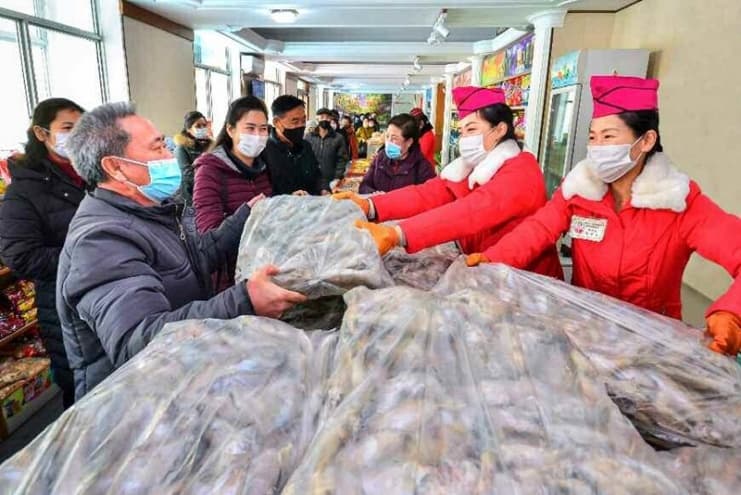
North Korean fishers forced to surrender 80% of their catch as state tightens grip on seafood supply
Fishers operating out of Chongjin in North Hamgyong province are struggling to make ends meet during the peak squid season after the state expanded mandatory catch quotas, requiring registered fishing vessels to hand over 80% of their haul to state-run fishery management offices. The squeeze is seve
Daily NK
75
4 min read
0 views

Fishers operating out of Chongjin in North Hamgyong province are struggling to make ends meet during the peak squid season after the state expanded mandatory catch quotas, requiring registered fishing vessels to hand over 80% of their haul to state-run fishery management offices. The squeeze is severe enough that crew members working pre-dawn shifts at sea are sometimes returning with fewer than five squid to show for their labor.
A source in North Hamgyong province told Daily NK on Monday that private fishing boats registered with the Ryongam Fishery Management Office in Chongjin have been heading out before dawn to fish during the current squid season. Under state policy, all vessels registered with a state fishery office must operate according to the national economic plan, and a mandatory quota of 80% of each catch goes directly to the state. Fishers retain the remaining 20% for personal use or sale.
The source said the mandatory surrender share has grown significantly over time. In the past, fishers gave up only a portion of their catch and kept enough to sell at market and accumulate meaningful income. That arrangement has now effectively ended. Fishers say the state prioritizes its own quota while ignoring the basic livelihood needs of the people who do the fishing.
Conflict at sea as crew and boat owners fight over shrinking shares
Tension between boat owners and crew members has become a recurring problem. Owners, who bear the costs of fuel, maintenance, and equipment, are trying to maximize their cut of the 20% that remains after the state’s share is removed. Crew members, who work from around 2 or 3 a.m. until morning, say their take is negligible. The source noted that disputes between owners and crew over the division of the residual catch have grown increasingly common and fractious.
The economics of part-time fishing have collapsed as a result. In coastal cities like Chongjin, it was once common for workers to pay their work unit a set monthly fee and use the remaining time for supplementary fishing as a side income, a practice known in North Korea as “8·3 work” (a term referring to a system that allows workers to fulfill their state employment obligations with a cash payment and pursue independent income-generating activities on the side). The source said that approach has now largely disappeared in the fishing sector because the returns are too low to justify the effort.
State controls leave shelves bare despite expanded quotas
The broader implications extend beyond individual livelihoods. The state’s push to absorb more of the seafood supply has coincided with a sharp reduction in the volume and variety of fish and seafood available at jangmadang (the street markets that serve as the primary retail outlet for most North Koreans). Authorities claim that seafood is reaching the public through state-run stores, but the source said North Koreans on the ground report that those stores are simply not stocked.
The source described a situation in which the state collects more but delivers less: since the state increased its seafood intake, the actual amount of seafood that ordinary North Koreans can access has declined rather than improved. The pattern fits a wider trend in which North Korean authorities have been reasserting state control over the distribution of grain, food, and other essential goods while simultaneously restricting market channels, with the result that neither system is adequately supplying the population.
A Note to Readers


