Russia’s Nazi Past: the Collaboration Putin Doesn’t Mention
As Russia celebrates Victory Day on May 9, it’s time to confront an inconvenient historical truth: no occupied nation produced more Nazi collaborators than Russia itself. American scholar of Russian origin Alexander Dallin revealed that hundreds of thousands of Russians – perhaps more than a million
Kyiv Post
75
10 min read
0 views
Vladimir Putin calls Ukrainians Nazis. He labels President Zelensky – a man whose Jewish relatives perished in the Holocaust – a fascist. This grotesque inversion of history has become the Kremlin’s central justification for its war of aggression against Ukraine.
Putin wraps himself in the sacred memory of the Great Patriotic War, positioning Russia as the eternal enemy of fascism, the liberator of Europe, the nation that can never be tainted by association with Nazism.
But it’s a cheap lie. And as Russia celebrates Victory Day on May 9, it’s time to confront an inconvenient historical truth: no occupied nation produced more Nazi collaborators than Russia itself.
This isn’t Ukrainian propaganda or Western revisionism. It’s documented historical fact, meticulously detailed in the American scholar of Russian origin, Alexander Dallin’s 1957 landmark study, German Rule in Russia, 1941-1945, reprinted in 1971 – the definitive scholarly work on the Nazi occupation of Soviet territories and the local responses.
The brutal honesty of this research revealed that hundreds of thousands of Russians – perhaps more than a million – actively collaborated with Nazi Germany. They served as soldiers in German uniform, as police auxiliaries hunting partisans and Jews, as administrators implementing Nazi policies, as propagandists for Hitler’s cause. They did so willingly, systematically, and on a scale that dwarfs collaboration in any other occupied territory.
Russia launched a ballistic missile and 43 strike drones against Ukraine, hitting six locations and causing civilian deaths. In the Chernihiv region, a father and son were killed during a drone strike on an agricultural enterprise. The attack occurred as a US-mediated three-day ceasefire was scheduled to begin. While the Air Force confirmed the timing of the strikes, it remained unclear if the bombardment continued after the midnight start of the truce, which was tied to a large-scale prisoner exchange and Victory Day events.
(Photo of Alexander Dallin’s 1957 landmark study, German Rule in Russia, 1941-1945)
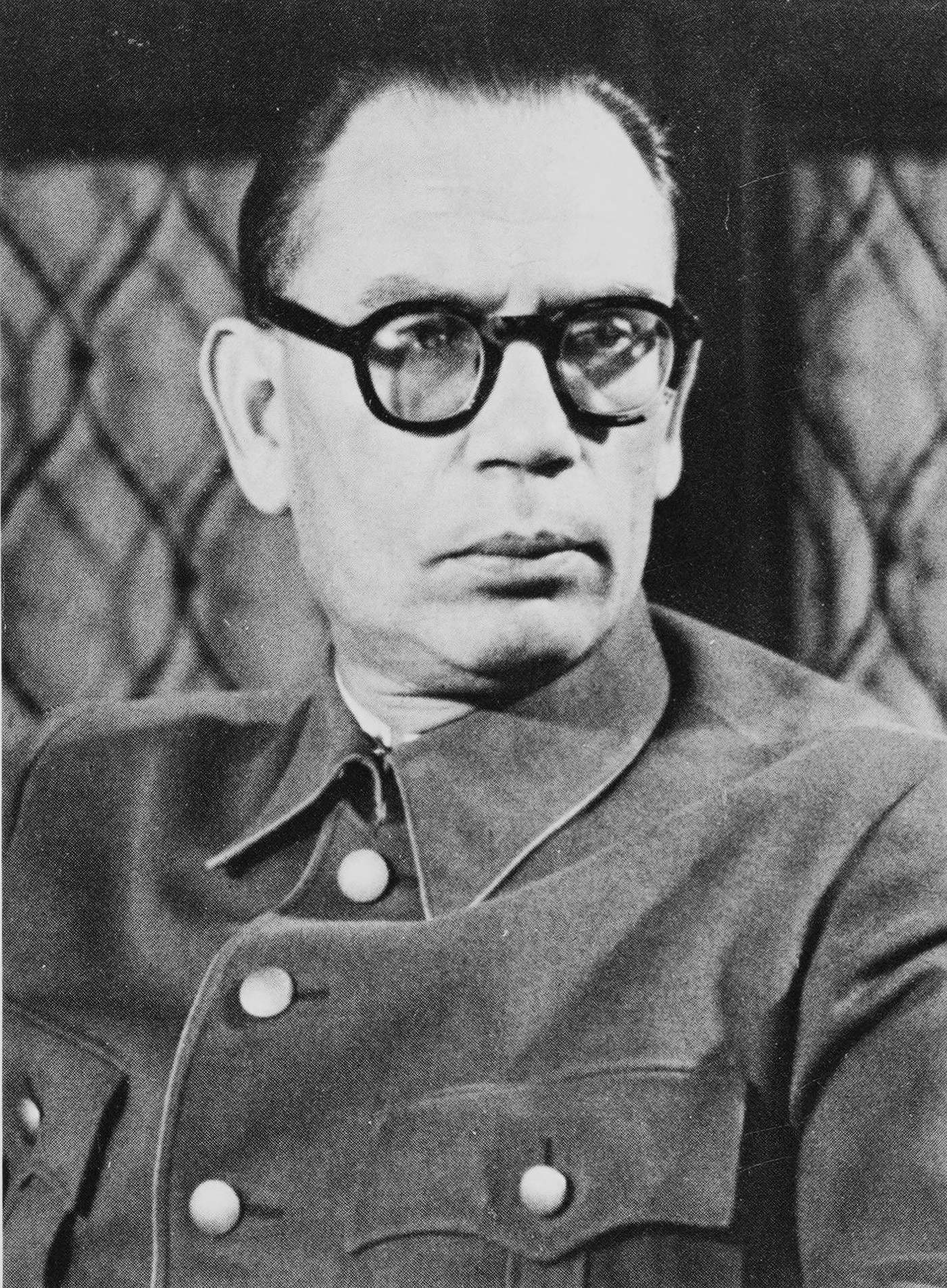
The most visible symbol of this collaboration was General Andrei Vlasov’s Russian Liberation Army (ROA), a Nazi-aligned military force composed of Russians fighting against their own country under German command. Vlasov, a decorated Soviet general who defected to the Germans, recruited tens of thousands of Russian prisoners of war and volunteers.
These weren’t Ukrainians, Balts, or Caucasians – populations Putin’s propagandists love to smear as Nazi sympathizers. These were ethnic Russians, wearing German uniforms, swearing oaths to Hitler’s cause, fighting and dying for the Third Reich.
But Vlasov’s army was merely the tip of the iceberg. Dallin documents a vast apparatus of Russian collaboration: village elders who administered occupied territories for the Germans, Russian police battalions that participated in anti-partisan operations and mass executions, Russian bureaucrats who helped organize forced labor deportations, Russian propagandists who produced newspapers and radio broadcasts promoting Nazi ideology. In some occupied regions, the entire administrative structure was staffed by Russian collaborators.
This history doesn’t diminish the Soviet Union’s ultimate victory over Nazi Germany, nor the immense suffering and heroism of millions of Soviet citizens of all nationalities. But it does expose Putin’s narrative as a cynical manipulation of history designed to justify present-day aggression.
Russian fascism
The Bolsheviks also saw their similaries with fascists. One of Lenin’s associates, Nikolai Bukharin, declared in 1923: “Characteristic of the methods of fascist struggle is the fact that they, more than any other party whatsover, have adopted, and apply in practice, the experience of the Russian revolution. If they are considered from the formal point of view, i.e. of the technique of their political methods, then it is a full application of Bolshevik tactics and specially of Russian Bolshevism.
The Nazi-Soviet alliance
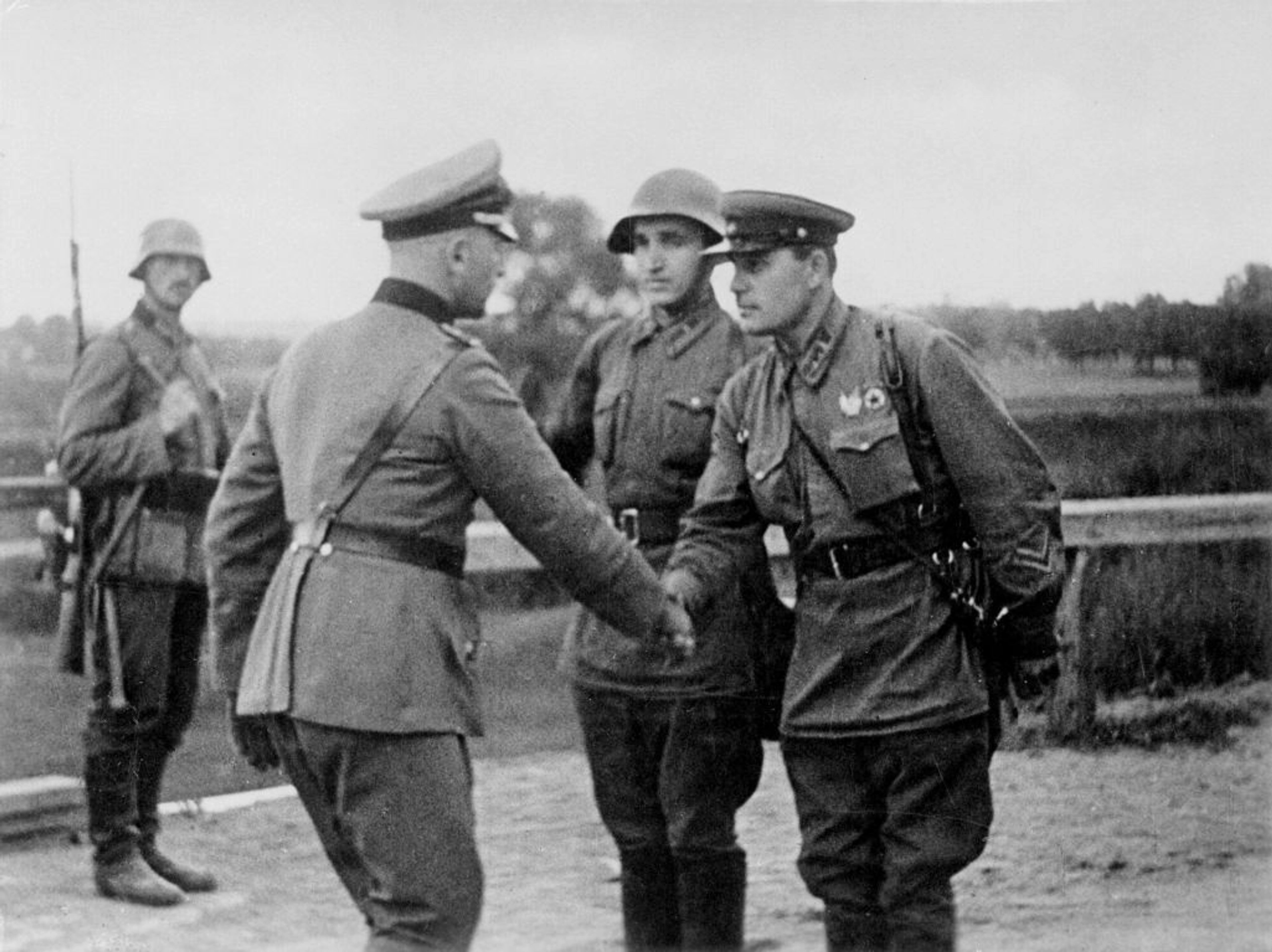
The Molotov-Ribbentrop Pact of August 1939 wasn’t merely a non-aggression treaty – it was an alliance of Nazi Germany and the Soviet Union that enabled Hitler’s conquest of Poland and Stalin’s seizure of the Baltic states and Western Ukraine. Soviet trains delivered crucial raw materials – oil, grain, manganese – that fueled Hitler’s war machine. Stalin toasted Hitler’s health. Soviet and German officers held joint victory parades in conquered Polish cities. And in 1941, Nazi officers were present at the May Day parade on Moscow’s Red Square.
This pre-war relationship created networks and precedents that would facilitate collaboration after 1941. Soviet officials who had worked with German counterparts during the pact years knew how to cooperate with Nazi administrators. When German armies swept into Soviet territory, they found Russians who had already learned that accommodation with Nazis was possible – even profitable.
Photo portrait of Andrey Vlasov, published in the US edition of S. Steenberg's "Vlasov" without the creator being credited and a copyright notice. (Photo: Public domain / Wikicommons)
General Vlasov: the face of Russian collaboration
Vlasov was no marginal figure or desperate opportunist. He was one of the Red Army’s rising stars – a general who had distinguished himself in the defense of Moscow in 1941, earning the Order of the Red Banner and Stalin’s personal commendation. His defection to the Germans in July 1942, after being captured during the disastrous Volkhov offensive, sent shockwaves through the Soviet command.
But Vlasov didn’t simply surrender. He actively embraced collaboration, becoming the public face of Russian opposition to Stalin and the most prominent Russian advocate for a Nazi-aligned “Russia without Bolsheviks.” Dallin documents how Vlasov toured prisoner-of-war camps and occupied territories, delivering speeches that portrayed Hitler as Russia’s liberator from Jewish-Bolshevik tyranny.
The Russian Liberation Army (ROA) he commanded eventually numbered over 120,000 men – some estimates put it higher. These weren’t all desperate prisoners choosing German service over starvation, though many began that way. Thousands volunteered willingly, including former Soviet officers, intellectuals, and civilians from occupied territories who saw in Vlasov’s movement a chance to settle scores with the Communist regime. The ROA fought against Soviet partisans, guarded concentration camps, and participated in anti-partisan operations that included mass reprisals against civilians.
This was collaboration as ideology, as choice, as betrayal.
Beyond Vlasov: the staggering scale of Russian collaboration
Vlasov was merely the most visible face of a phenomenon far larger and more disturbing. Conservative estimates suggest well over a million Russians actively collaborated with the German occupiers in various capacities.
Russian police battalions, the Schutzmannschaft, numbered in the tens of thousands. These weren’t German units with a few Russian interpreters – they were Russian-staffed formations that hunted partisans, guarded ghettos, participated in mass executions, and helped implement the Final Solution. Dallin documents case after case of Russian auxiliary police units involved in anti-Jewish actions, from rounding up victims to actual participation in shootings. In some occupied cities, the entire police force was Russian.
Russian administrators ran occupation governments across vast territories. They collected taxes for the Germans, organized forced labor roundups, distributed rations, and maintained civil order under Nazi authority. Many were enthusiastic participants who saw opportunity in collaboration. Russian mayors, district administrators, and bureaucrats actively facilitated German policies, including the brutal Ostarbeiter program that deported millions of Soviet civilians to slave labor in Germany. Russian collaborators compiled the lists, organized the transports, and hunted down those who tried to hide.
Russian civilians served as informers, denouncing partisans, Jews, and Communist officials. Russian translators and propagandists produced material promoting Nazi ideology. Russian businessmen profited from confiscated Jewish property.
This is the history Putin desperately wants Russians to forget and the world not to know about. He wraps himself in the sacred memory of Soviet victory, in the genuine heroism of millions who fought and died to defeat Nazism. But he erases the shameful reality that no occupied population produced more collaborators than Russia itself. The scale of Russian collaboration dwarfed that of France, Poland, or any other occupied nation, including Ukraine, Belarus, and the Baltic states.
Soviet mythology transformed the Great Patriotic War into a story of pure Russian heroism, conveniently omitting not only the million Russians who served the Third Reich, but also the Ukrainians, Belarusians, Kazakhs, and other non-Russians who fought and died in disproportionate numbers to defeat Nazi Germany. Stalin claimed victory belonged to Russia alone – a lie Putin perpetuates today.
Ukrainian soldiers comprised a massive portion of the Red Army’s fighting force; Ukrainian cities bore some of the war’s worst devastation. Yet in Putin’s narrative, as in Stalin’s, these contributions vanish, replaced by an exclusively Russian triumph.
What Russia celebrates as the “liberation of Eastern Europe” was nothing of the kind. Soviet armies didn’t liberate Poland, Czechoslovakia, Hungary, or the Baltic states – they conquered them, replacing Nazi totalitarianism with Soviet despotism.
The populations that had suffered under Hitler’s occupation found themselves under Stalin’s boot, their nations absorbed into an empire as merciless as the one they’d just escaped. Soviet occupation often retained the same local collaborators who had served the Nazis, simply redirecting their services to new masters.
Post-Soviet Russia inherited this falsified narrative and weaponized it. Victory Day became a tool of nationalist mobilization, a celebration that demands amnesia about Russian collaboration, about non-Russian sacrifice, about the Molotov-Ribbentrop Pact, about the Russians who wore German uniforms and swore oaths to Hitler, and about the true nature of Soviet “liberation” – which was conquest and subjugation.
Soviet and German officers greet each other warmly days after the Soviet invasion of Poland in September 1939. (Photo: Public domain / Wikicommons)
Putin’s lies about Ukrainian Nazis aren’t just propaganda – they’re the justification for genocide. Every Russian missile that strikes a Ukrainian apartment building, every mass grave discovered in liberated territories, every Ukrainian child deported to Russia is justified by this inverted history that casts Russia as the eternal anti-fascist liberator and Ukraine as the Nazi successor state. Putin erases Ukrainian contributions to defeating Hitler even as he falsely accuses Ukrainians of being Hitler’s heirs.
It’s the Russians who must confront what their grandparents did – all of it. Millions fought heroically against Hitler, or were forced to serve as cannon fodder. But hundreds of thousands, perhaps more than a million, chose collaboration. They served in German uniform, administered occupied territories, hunted Jews and partisans, and facilitated Nazi genocide.
Meanwhile, Ukrainians and other non-Russians died in vast numbers fighting the same enemy, only to have their sacrifice erased from Russian memory. And the “liberation” Russia celebrates brought Eastern Europe not freedom but decades of Soviet oppression.
On Victory Day, as Putin lays wreaths and delivers speeches, Russians should ask: What are we celebrating? The defeat of Nazism? Then why erase our own collaboration with it? Why claim sole credit for a victory won by all Soviet peoples? Why call conquest “liberation”? Why falsely accuse others of the crimes our own people committed?
The archives exist. Dallin’s research stands. The evidence is clear. Russia collaborated with Nazi Germany on a massive scale, before and during the war. Non-Russians – especially Ukrainians – played critical roles in defeating Hitler, roles Russian mythology erases. Soviet armies didn’t liberate Eastern Europe; they occupied it.
Ukrainians are not Nazis, and though there were certainly some who sided with the Germans (remember the Soviets had murdered millions of Ukrainians in the 1930s through artificial famine and repression), hundreds of thousands of Russians were Nazi collaborators.
It’s time Russians faced that truth. And it’s time the world stopped letting Putin’s regime hide behind a sanitized version of history while it commits the very crimes it falsely attributes to others.
The views expressed in this opinion article are the author’s and not necessarily those of Kyiv Post.