
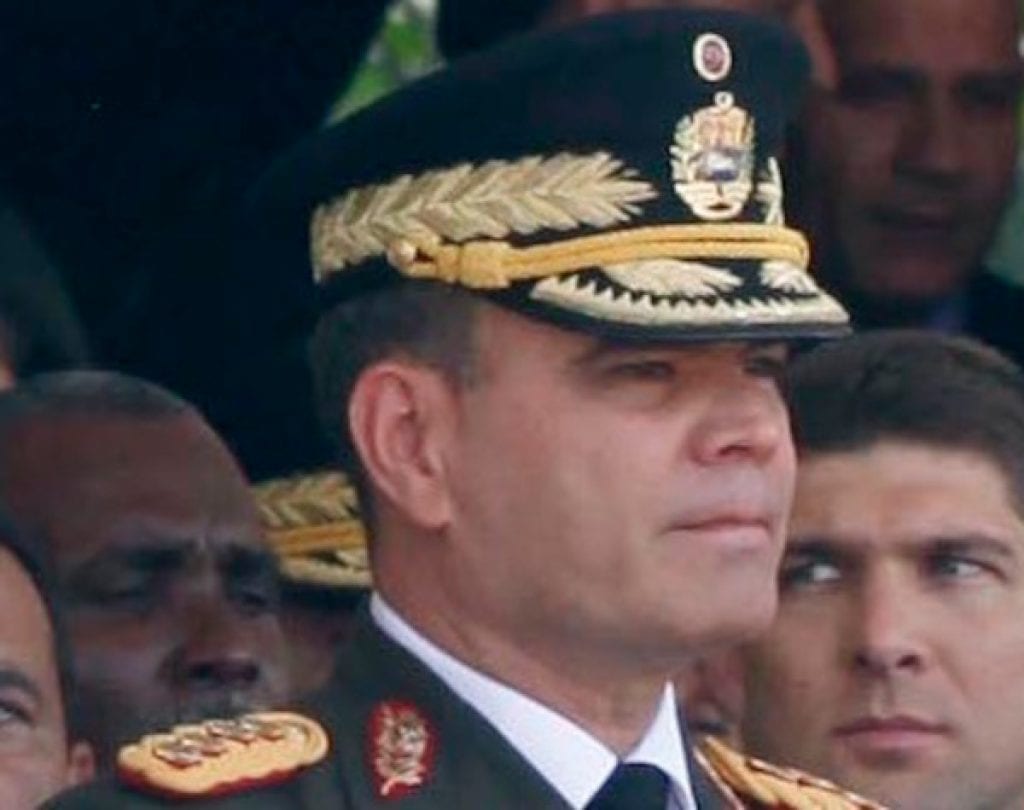
Venezuelan acting President Delcy Rodríguez replaced longtime Defense Minister Vladimir Padrino López with General Gustavo Gonzalez López on March 18, followed by implementing a sweeping reshuffle of senior military leadership. The change coincides with broader US-backed stabilization efforts and limited progress on improving human rights in the South American country.
Washington formally reestablished diplomatic and consular relations with Caracas on March 5 and reopened its embassy on March 14. US efforts have resulted in a February 20 amnesty law that has contributed to the release of dozens of political prisoners. However, despite these steps, a UN fact-finding mission reported that repressive institutions remain intact, with at least 87 people detained since January, and civic space still severely restricted. Meanwhile, opposition leader María Corina Machado, currently abroad, has pledged to return to Venezuela and push for new elections.
In Rodríguez’s announcement of replacing Padrino López with Gonzalez López, she thanked Padrino, a central figure under former Venezuelan President Nicolás Maduro for over a decade, for his service and said he would receive new responsibilities. No official reason was given for the change.
Gonzalez López previously helmed the National Bolivarian Intelligence Service (SEBIN) and was implicated in the defenestration and murder of Councilman Fernando Albán, who died in SEBIN custody. The murder of Albán, who was a prominent member of the Primero Justicia party, sparked a massive public backlash that ultimately led to Gonzalez López’s dismissal as head of SEBIN.
A day after ousting Padrino, Rodríguez began an even broader overhaul of the armed forces. She announced a wholesale change of military commanders: a new head of the Strategic Operational Command (CEOFANB) and new commanders for the Venezuelan Army, Air Force, Navy, National Guard, and Militia, along with other senior posts. This restructuring came weeks after General Francis Donovan, the head of US Southern Command (SOUTHCOM), made a surprise visit to Caracas. SOUTHCOM said the visit focused on “steps to ensure the implementation of President Donald Trump’s three-phase plan – particularly the stabilization of Venezuela.”
Part of Washington’s stabilization efforts has been tied to the release of political prisoners in Venezuela. The Venezuelan legislature passed a new political amnesty law on February 20, aimed at freeing some detainees; explicitly excluding those accused of “armed actions” involving foreign actors. Regime officials have charged several opposition figures, notably 2025 presidential candidate María Corina Machado, with analogous indictments.
The new law has drawn mixed reactions. “If the amnesty is not as broad as we would have liked it to be, that does not mean that the fight for the freedom of all the imprisoned and pursued is over. … Total liberty will come when the apparatus and culture of political repression are dismantled,” Gonzalo Himiob, vice president of the Venezuelan rights NGO Foro Penal, said.
Nevertheless, hundreds of political prisoners have been released. Foro Penal reported that just over 540 prisoners have been freed since January 8, of whom about 91 were released under the new amnesty law. Rodríguez’s government claims that nearly 2,200 individuals have been released or had restrictions lifted in recent months, though independent observers caution that many remain in detention without due process.
Opposition leader deputy Juan Pablo Guanipa, a Machado ally and the leader of the Primero Justicia party, said after the amnesty’s passage on February 20 that he was “completely free” and urged that all other political prisoners be released. Guanipa had been released earlier that month, but was abducted and rearrested less than a day later, followed by being released from prison but put on house arrest. His house arrest subsequently ended under the amnesty law. Freddy Superlano of the Voluntad Popular opposition party, who was forcibly disappeared after the 2024 presidential election, also had his house arrest lifted on February 27 as part of the amnesty.
Human-rights groups remain highly critical of the interim government’s approach. A UN fact-finding mission reported to the Human Rights Council on March 12 that, despite the leadership change, “complex legal and institutional machinery” that enables human rights violations largely endures. It found that civic space remains “severely restricted;” 87 people, including journalists, have been detained since January; and key repressive laws and institutions “have not been reviewed or reformed.” The UN noted that while prisoner releases and the amnesty law are “positive” steps, these have been undermined by irregularities and limited reach.
The United States has nevertheless continued stabilization efforts and moved forward with formally reestablishing diplomatic and consular relations with the Rodríguez administration last week. The US State Department said the move will “facilitate joint efforts to promote stability, support economic recovery, and advance political reconciliation” in Venezuela. Simultaneously, Rodríguez said her administration was committed to “promoting a work agenda that strengthens cooperation for the benefit of both countries.”
Opposition leader Machado, currently abroad, has announced plans to return to Venezuela in the coming weeks and pledged to push for new elections. In a social‑media message on March 8, she called for elections and told Venezuelans to prepare “for a new and gigantic electoral victory.” However, Rodríguez said that Machado should have to “answer to Venezuela” for supporting the US military raid that captured former Venezuelan President Nicolás Maduro. In addition, US Secretary of State Marco Rubio previously emphasized that a stabilized economy and political reconciliation should precede elections.
Samuel Ben-Ur is a research analyst at the Foundation for Defense of Democracies.
Tags: Delcy Rodríguez, Gustavo González López, María Corina Machado, US-Venezuela, venezuela, Vladimir Padrino López


