Can Taiwan fix its military manpower shortage by training reservists in advanced weapons?

Taiwan is requiring its reservists to train longer and harder, introducing drones and US-made Himars rocket systems into a revamped 14-day call-up programme as it races to offset worsening troop shortages amid a demographic decline. One of the biggest reforms of Taiwan’s reserve force in decades, th

South China Morning Post
75
2 хв читання
0 переглядів
Can Taiwan fix its military manpower shortage by training reservists in advanced weapons?

Taiwan is requiring its reservists to train longer and harder, introducing drones and US-made Himars rocket systems into a revamped 14-day call-up programme as it races to offset worsening troop shortages amid a demographic decline.

One of the biggest reforms of Taiwan’s reserve force in decades, the overhaul reflects growing concern that a shrinking pool of military-age recruits and mounting pressure from Beijing mean the island can no longer rely solely on its standing military.

From this year, Taiwan has scrapped its previous five- to seven-day reserve call-up programme and replaced it with a mandatory 14-day course for all eligible reservists, the island’s defence minister said during a legislative hearing late last month.

“Besides training on new systems such as drones and the US-made High Mobility Artillery Rocket System (Himars), reservists will return to units matching the roles they held while on active duty under the military’s ‘returning personnel to their original positions’ policy,” Wellington Koo Li-hsiung said.

The defence ministry also plans to amend the law to place retired female volunteer service members under the reserve mobilisation system, arguing that women who served alongside men in active units should continue contributing after leaving the military.
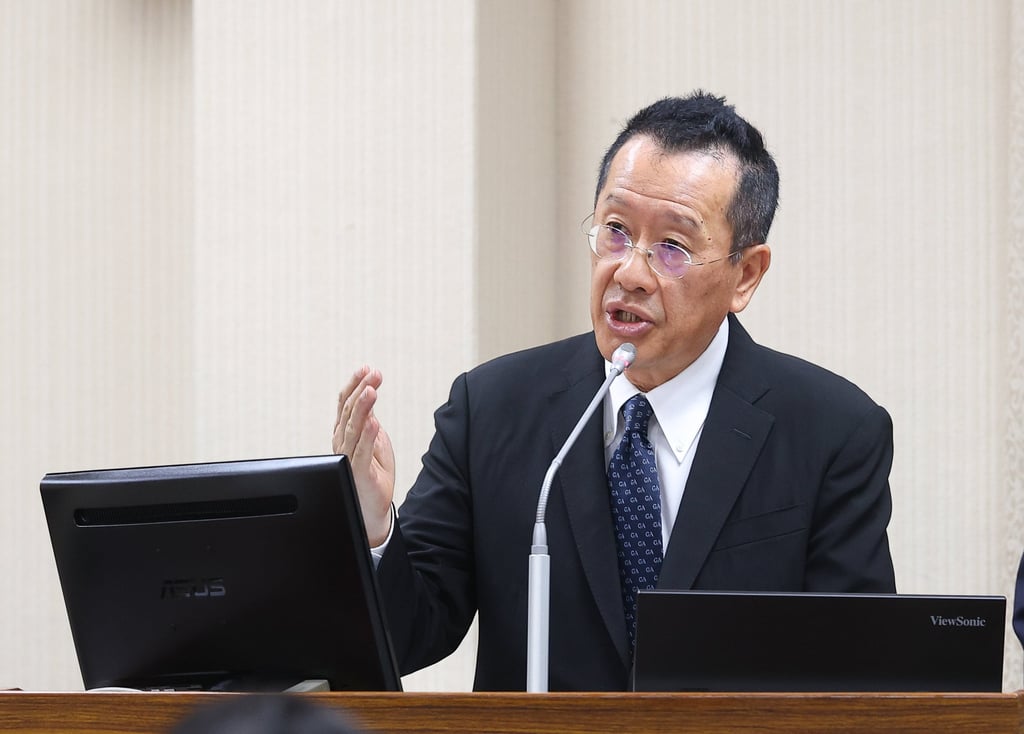
Wellington Koo, Taiwan’s defence minister, says the island has made a 14-day call-up programme mandatory for all eligible reservists. Photo: CNA

Wellington Koo, Taiwan’s defence minister, says the island has made a 14-day call-up programme mandatory for all eligible reservists. Photo: CNA

The reforms come as Taiwan confronts a deepening manpower shortage.

Оригінальне джерело

South China Morning Post

Поділитися статтею

Схожі статті

China’s hukou system reforms: will local government reluctance fail migrant workers?
🇨🇳🇹🇼China vs Taiwan
South China Morning Post

China’s hukou system reforms: will local government reluctance fail migrant workers?

Starting in September, Wang Ming’s 12-year-old son will need to go to school in a city 120km (75 miles) from his home in Beijing. Originally from northeastern China, Wang and his wife have lived in Beijing for more than 20 years. But even though they work for a bank and an insurance company, they ha

близько 9 годин тому1 min
Is ‘no Greenland seafood for China’ the US’ new security doctrine?
🇨🇳🇹🇼China vs Taiwan
South China Morning Post

Is ‘no Greenland seafood for China’ the US’ new security doctrine?

An unmistakable pattern has emerged in the US’ strategy to contain China. Washington has sought to deny China access to frontier technologies and key commodities, and to redirect related supply chains to revitalise American industries. In this context, US President Donald Trump’s intense interest in

близько 12 годин тому1 min
The US has failed to understand China
🇨🇳🇹🇼China vs Taiwan
South China Morning Post

The US has failed to understand China

China is such a giant player in the global economy that understanding how the US-China contest of the century for international primacy will evolve has become crucial. Some Westerners, especially those in the United States, feel so threatened that they have resorted to protectionism, with global fra

близько 16 годин тому2 min
America’s first sphere of influence becomes the test of its power at 250
🇨🇳🇹🇼China vs Taiwan
South China Morning Post

America’s first sphere of influence becomes the test of its power at 250

As the United States marks the 250th anniversary of its founding, it confronts a new world order dominated by its relationship with China. In this wide-ranging series, we examine the pressure points and possibilities in those ties, from hard tech to soft power. Here, Teresa Elena Frontado and Igor P

близько 22 годин тому2 min