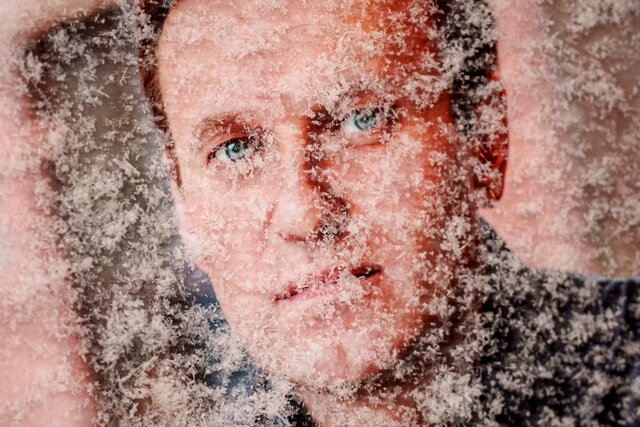
Among the more than 20,000 names on Rosfinmonitoring's list of "terrorists and extremists," Meduza found around 100 people who have already died. One of them is the late opposition politician Alexey Navalny. Two years after Russian authorities killed him in prison, his family still hasn't been able to get his name struck from the registry — despite the law clearly stating that documented confirmation of death is grounds for removal. Here's what we know about the dead stuck in Russia's extremism database.
February 16 marked two years since Alexey Navalny was killed in a Russian prison. Yet Russia's most prominent opposition leader remains on the official government list of "terrorists and extremists."
Navalny was first added to the registry in January 2022, months after Russian authorities designated his Anti-Corruption Foundation (FBK) an "extremist organization" and opened a criminal case accusing him and his allies of creating an "extremist group."
In December 2023, an asterisk appeared next to his name — the symbol Russia's Federal Financial Monitoring Service (Rosfinmonitoring) uses to mark individuals "for whom there is information about involvement in terrorism." A year earlier, Navalny had said that a criminal case for the "promotion of terrorism" had indeed been opened against him.
Under Russian law, a person who dies is supposed to be removed from the list. The law explicitly states that documented confirmation of a person's death is grounds for exclusion from the registry.
So why is Navalny still there? No one seems to know.
In April 2024, lawyer Mikhail Benyash suggested the explanation may lie in bureaucracy. In his experience, removing a person from the registry can take six to eight months of "hostile" correspondence with prosecutors and the Federal Security Service (FSB), complete with certified copies of court decisions. Without sustained pressure, the process can drag on even longer.
In January 2025, Navalny's widow, Yulia Navalnaya, published Rosfinmonitoring's response to a request from his mother, Lyudmila, to remove him from the list. The agency refused to do so until the criminal case against him was formally closed.
Navalny isn't the only deceased person whose name remains in the registry. Using data from Russia's National Inheritance Registry, we identified around a hundred people who have died but are still listed as "terrorists and extremists." The real number of deceased individuals on the list may be higher: not every death results in an inheritance case, particularly when the person was prosecuted on terrorism charges.
Most of those who remain on the list after death were classified as "terrorists," though some were "extremists." Among them is Andrey Kotov, who was accused of running a travel agency catering to LGBTQ+ tourists. He died in a Moscow pre-trial detention center in December 2024 but remains in the registry.
So does Pavel Ganzhula, a neo-pagan sentenced in 2017 to five months in prison for participating in an interregional organization called "Spiritual-Ancestral Sovereign State Rus." He died in January 2023 and is still on the watchlist.
Some cases defy even basic chronology. According to inheritance records, Ruslan Alimpashaevich Yakhyaev from Chechnya's Shelkovskoy district died on March 4, 2000, at age 32. His death certificate was issued in December 2000; an inheritance case was opened only in 2021. Yet Rosfinmonitoring added him to the registry as a "terrorist" in the summer of 2023 — more than two decades after his recorded death. He remains there. It's not clear whether this means Yakhyaev didn't actually die, or whether the authorities were operating under some other logic.
"Dead souls" are sometimes removed from the list — but not in any consistent way. Chechen militant Supyan Abdullayev, a top lieutenant of Islamist insurgency leader Doku Umarov, was killed in March 2011. He was removed from Rosfinmonitoring's registry only at the end of 2025.
By contrast, Faizrakhman Satarov, a Tatarstan-based sect leader who declared himself a new Muslim prophet, was added to the list in 2013 and removed in 2015 — on the very day he died.
For those who are eventually removed, the average time spent in the registry after death is about one year and 10 months, based on 123 documented cases. The longest was nine years.


