NATIONAL HARBOR, MD — L3Harris is pushing forward with production of its Iver4 900 autonomous undersea vehicle (AUV) under a previously unknown Defense Innovation Unit effort that is looking to deliver a torpedo tube launch and recovery (TTL&R) autonomous drone to the U.S. Navy’s attack submarine fleet.
The AUV will be delivered across multiple classes of attack submarines that will operate the drone as an underwater loyal wingman performing mine warfare, forward intelligence, and seabed mapping missions. Naval News received an update on the program’s status with JR Gear, VP and General Manager of Integrated Systems and Encryption during the Sea Air Space 2026 Symposium in National Harbor, Maryland.
“When a diver is out there in the ocean, a lot of times they have a dive buddy for safety,” Gear told Naval News on the show floor. “[and] unmanned systems are really good for the dull, dirty, and dangerous business. So you think of all those things together—what’s the dive buddy that a submarine has?”
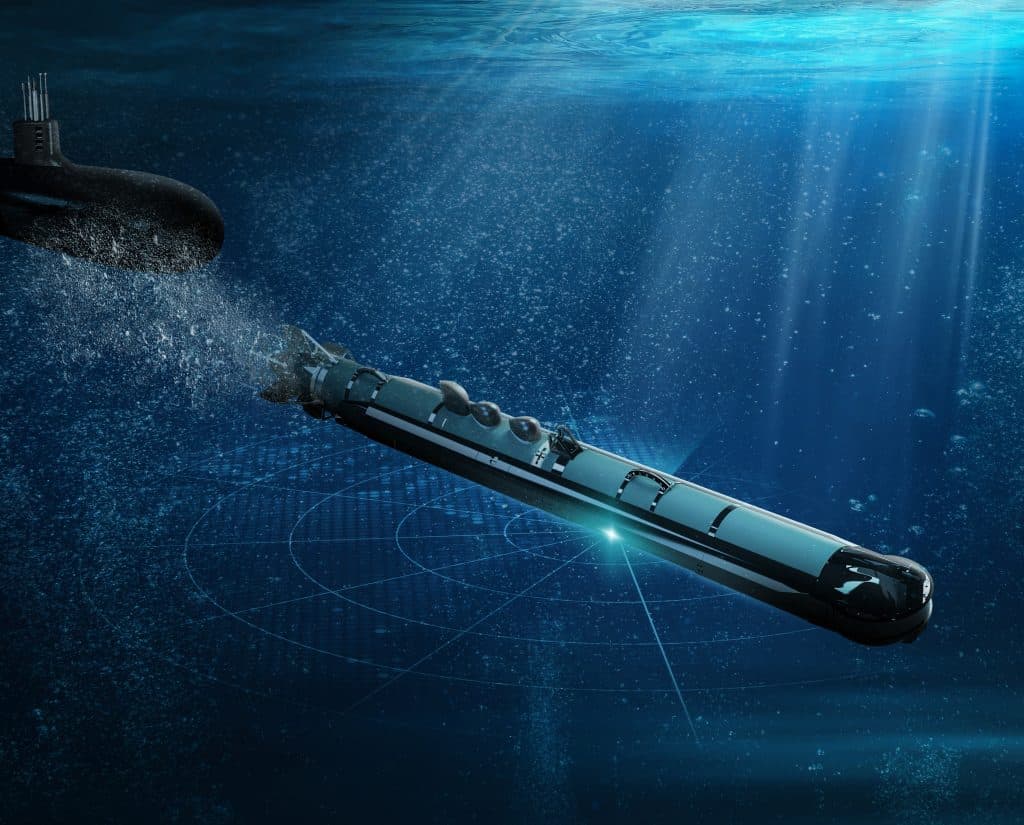
L3Harris rendering of a U.S. Navy submarine launching an Iver4 900 AUV.
As an organic element of a submarine’s sensors, Iver4 900 is capable of performing the “dirty work” of high-risk missions like seabed mapping, forward intelligence gathering, and other classified missions that U.S. Navy submarines often complete during routine deployments.
The Iver4 900, according to Gear, is being proven out in exercises with the U.S. Navy, iterating the design and its concept of operations through at-sea availabilities with Virginia-class submarines. The most important part of these exercises will inform how the AUV is used in real-world scenarios—leveraging its multi-mission and modular capabilities.
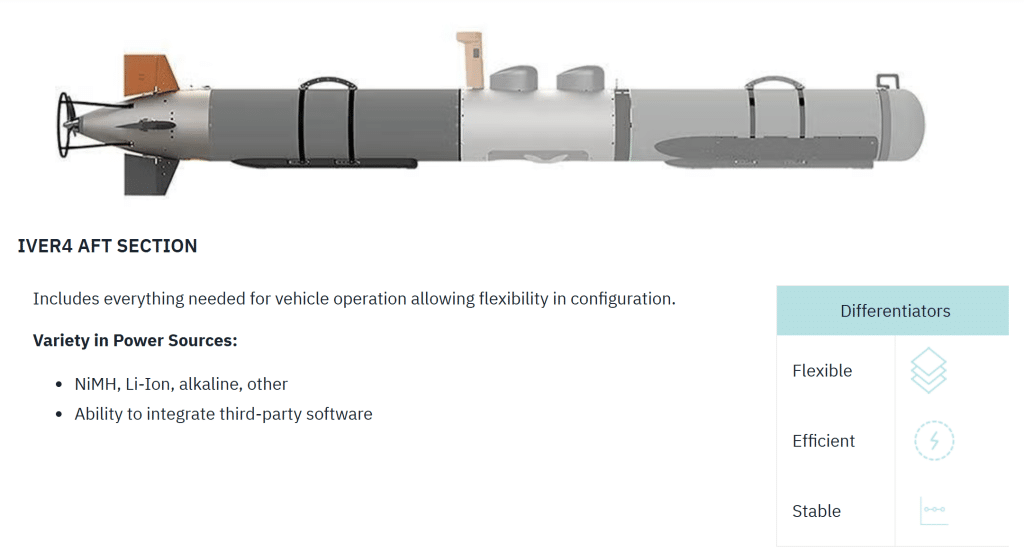
The Iver4 900 has swappable payloads for sensors along the side of the AUV, in the nose, and in the tail, which are all removable and swappable for different configurations. This includes various types of ISR payloads, including sonar arrays, seabed mapping systems, minesweeping capabilities, and other, third party platforms that can be installed outside of L3Harris.
Powered by lithium-ion batteries, the AUV can operate between 16 and 24 hours independent of the submarine. With a mission minimal payload, the AUV can operate for 40 hours on one charge.